Showing posts with label Atheism. Show all posts

Tuesday, February 21, 2012

Faithless in Philly

0 comments
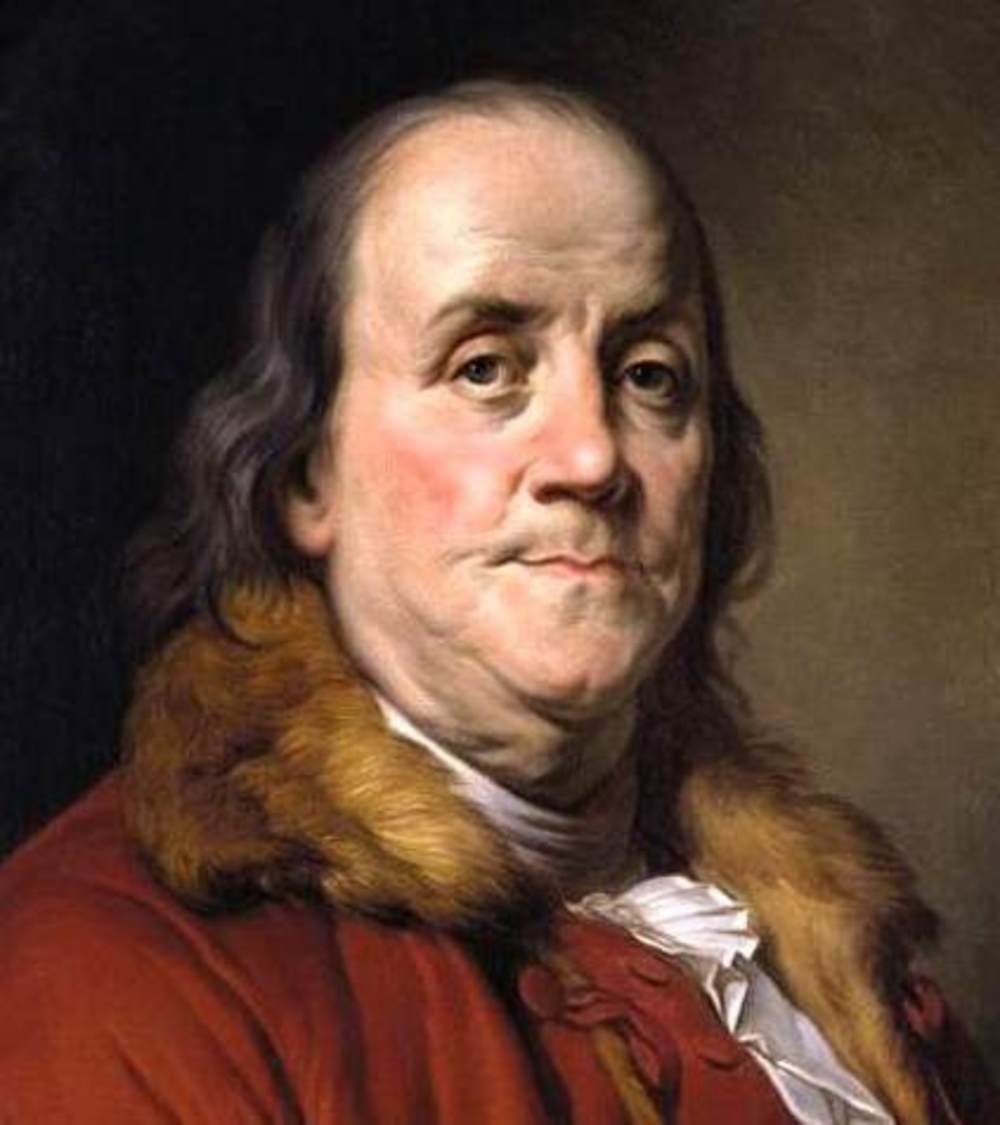
I started graduate school at the University of Pennsylvania in 2010 and frankly, I was quite surprised that we didn't have an atheists and freethinkers group. In a university founded by a man who gave us gems such as, 'Lighthouses are more helpful than churches' and 'The way to see by faith is to shut the eye of reason', all I found were faith based groups. There was the Christian Association, Penn Hillel, the Muslim Student Association, the Hindu Students Council, the Penn Catholic Association and more*. But there wasn't a forum where freethinkers could meet and discuss ideas -- social and political issues, science, education, the common lack of faith in the supernatural, etc.

I did toy with the idea of starting a group, but being the lazy person that I am, I didn't really go ahead with it. It seemed like there were too many hoops to jump through and the fact that I was going to be here at Penn for only a short time didn't really help matters. So I was overjoyed when I noticed a poster calling attention to a Darwin Day event conducted by a group called Rekindle Reason.

Rekindle Reason was founded by three freshmen, Emmett Wynn, Isaac Louis Garcia and Seth Koren. Their first official meeting was on 12th February, 2012, the 203rd anniversary of Charles Darwin's birth. It was a relatively light-hearted affair --  we discussed group policy and watched a few videos. The main aim of the group is to foster a community of atheists and freethinkers and encourage critical thinking. The mission statement of Rekindle Reason reads as follows:

Rekindle Reason: A Community of Atheists, Agnostics, and Freethinkers at the University of Pennsylvania is to be an organization first and foremost dedicated to fostering community. Association with individuals of similar philosophies is oft lost for the irreligious, and we aim to make certain these members of the Penn community have such access and are aware that they are not alone in their views. Our meetings shall be havens in which people can question religious beliefs in absolute safety and security.

We wish to encourage the constituents of the University of Pennsylvania community-at-large to think critically about their superstitious and indoctrinated beliefs, as well as make the community aware of the detrimental effects on individuals and on society that religious belief all-too-commonly spurs.

We shall advocate for thought based solely upon science, logic, and reason: the three arbiters of a healthy, modern life. We shall show that neither religion nor any belief in higher powers, superstition, or pointless shibboleth is necessary for individuals to be moral, caring people. Furthermore we advocate that critical thought based upon these three arbiters is more important to human progress than mythical belief, and that it is within our reach to create progressive, just, peaceful societies founded upon these ideals and free of superstition.

Finally, we shall support and advocate for the final severance of the collusion of church and state. The influence of religion upon politics in this nation still occurs to a sorrowful degree. The nation can and must free itself of this oppressive yoke, and in doing so enlighten our policy- and decision-making.

I really hope they can foster enough interest and keep the group going. Not to be presumptuous, but I think Ben Franklin - one of America's greatest thinkers and inventors -- would be proud to see a group that encourages free thought in the university he founded about 250 years ago.

Rekindle Reason' Facebook group can be found at: https://www.facebook.com/groups/251334604943704/
If you go to Penn, and you are an atheist, agnostic, freethinker, secularist or humanist, go ahead and join the group.


*I'm not saying that these groups shouldn't exist. On the contrary, they have every right to practise their faith as long as they don't impose themselves on others, and I've had no reason to think that they do.


Wednesday, January 11, 2012

Pakistan's Quest for Truth

0 comments
After Rick Santorum's advocacy for procreation-only sex and the pope's anti-gay comments, it gladdens me to learn of the Pakistan Atheists and Agnostics (PAA) group. In a country known for it's strict anti-blasphemy laws, where Islamist militancy has been on the rise in recent times, the PAA is a sign -- small, but nevertheless a sign -- of hope. Their goal is to let other atheists in Pakistan know that they are not alone.

Huzrat NaKhuda founded the Facebook group a few months ago and membership now stands at over 800. His name is obviously a pseudonym, for revealing his identity might mean death. In Pakistan, blasphemy is a crime that calls for life imprisonment. But many a time, a person accused of blasphemy ends up being murdered by fundamentalists. Take the case of Salmaan Taseer, the former governor of the Punjab province in Pakistan, who was assassinated for criticizing the blasphemy law. He didn't blaspheme. He merely criticized the laws and supported Asia Bibi who was sentenced to death for blasphemy against the Prophet Muhammad. And for this, he was shot and killed by his own bodyguard. In the face of such extremism, you have to commend Huzrat NaKhuda and all the other atheists in Pakistan for taking such a courageous step.

In an interview with The Commentator, Huzrat NaKhuda said that the battle for reason needs to be fought with urgency in countries like Pakistan, Afghanistan and Saudi Arabia, countries that are steeped in intolerance and backward thinking. He laments the lack of development in Pakistan and blames it on the adoption of a religion as the country's identity. He believes that progress is stifled whenever any country does this. He quotes the example of Mohammed Abdus Salam, the Pakistani theoretical physicist and the country's first and only Nobel laureate. Though a devout Muslim, Abdus Salam was discriminated against and shunned in his own country because he belonged to the Ahmadiyya sect, a group that was labelled non-Islamic by Pakistan.

"The nerve to claim one specific religion and one specific God out of hundreds as the real God, and rejecting all others merely because ones parents asserted so, seemed too presumptuous. That is when I started rejecting and accepting ideas based on arguments rather than scripture. Once you start doing that, it is only a matter of time."

NaKhuda thinks that the rise of Islamic fundamentalism in Pakistan is only partially responsible for the growing number of atheists in his country. While it has not directly increased the number of atheists/agnostics, the effect of fundamentalism has been to make closet atheists come out. But he does think that Islamic extremism in the country might have had a role in people beginning to question their own beliefs. But the biggest factors influencing the rise of atheism in Pakistan, he explained, is the Internet and social media. "People in small towns in Pakistan can listen to lectures by Carl Sagan, Richard Dawkins and Christopher Hitchens", he says. They become more aware of the reality of the universe as opposed to outdated Islamic teachings.

In a country where children are brainwashed right from the time they are kids, where madrassas are aplenty, where honor killings are still commonplace, it is amazing and comforting to see that people have slowly but surely started to question what they see as outmoded practices and views. Some of the women in the group have rebelled against the Quran's (and most religions') discriminatory stance against women. They believe that religion is nothing more than a tool for men in power to assert control. Yet others cite injustice and disillusionment as factors that lead them in their quest for truth.

The path towards atheism, or even skepticism is a perilous one. Almost every member uses a pseudonym. Most members haven't even come out to their parents or friends. Free expression is not a birthright in Pakistan and many Muslim countries. Bodily harm, torture and even death are common punishments for unbelievers.

Most people in Pakistan don't know that there is an option to not believe in god. Three quarters of the people think that apostasy should be punishable by death. Pakistan also has very strict blasphemy laws that calls for life imprisonment or death. Huzrat NaKhuda and the PAA want to change all that. It is a journey fraught with danger. But on behalf of all rational thinkers, free thought proponents and atheists, I wish all of them the very best. Nothing would make me happier than seeing Huzrat NaKhuda and his group achieve their goals and inspire other such groups in similar radically conservative societies in the world.

Sources:
To read the full interview with Huzrat NaKhuda in the Commentator: http://www.thecommentator.com/article/782/the_rise_of_atheism_in_pakistan
Pakistan Today article about PAA: http://www.pakistantoday.com.pk/2011/09/being-pakistani-and-atheist-a-dangerous-combo-but-some-ready-to-brave-it/
Huzrat NaKhuda's journey to atheism: http://www.wikiislam.net/wiki/Hazrat_NaKhuda_(former_Muslim)
The PAA website: https://e-paa.org/

Sunday, December 25, 2011

The Real Reason

0 comments
I saw a multitude of posts last night and today saying that Jesus is the real reason for the 25th of December. It's not family, friends, good food, sharing, giving and camaraderie. These are not reasons we celebrate the day. No, we have to have Jesus. I don't know if it's a lack of knowledge or just an amazing ability to ignore the truth.


For those of you who actually think Jesus (if he ever existed) was born on this day, let me ask you this. Ever seen shepherds herd sheep in the middle of winter? Yes, I know the Bible is riddled with inaccuracies and most people just turn a blind eye to the literal word of god when it so chooses them. And this might be another one of those instances. But I'll still press on and continue my history lesson on why this day has traditionally been the day of celebration. And no, it's not the birth of Jesus.

Hundreds of years before Christianity became a religion, the inhabitants of ancient Europe celebrated the winter solstice. The days were starting to get longer. The worst of the winter was behind them. The winter solstice signified a hope for the coming spring. For many, the evergreen trees reminded them of a bountiful year past. They brought these trees into their homes as a sign of hope for the future. They believed the trees would ward off evil spirits and illnesses. Others believed that winter happened because the sun was getting weaker and the solstice was a sign that the sun was getting stronger. It was a reason to celebrate.

The Norse called the winter solstice, Yule. For them too, it was an end to days of darkness and a return of the sun. They brought in large logs into their homes and set fire to them. Some of these logs would last 12 days. They feasted and celebrated while the logs would burn. This was the origin of the 12 days of Christmas that has become commonplace now.

The Romans celebrated Saturnalia in honour of Saturn, the god of agriculture. The Romans didn't have the harsh winters of Scandinavia and Germany. For them it was a hedonistic time. They feasted and drank. December 25th was also the birth of the Roman sun god, one of the most sacred days of the year.

In the 4th century CE, when Christianity was still a fledgling religion with but a handful of followers, the Christian leaders had to do all they could to make their religion more acceptable to the locals. They incorporated many pagan rituals into their traditions. Pope Julius I declared the 25th of December to be the day Jesus was born, borrowing from the winter solstice festivals of Europe and the birth of the sun god. And this, mind you, happened sometime between 337 and 352 CE. Not when Jesus was purportedly alive. Not even right after his death. It was a good 300 years later. This date was chosen so that the pagans would still be able to celebrate their festivals (like they had done for hundreds of years) even after converting to Christianity. This increased the chances that Christianity would be popularly embraced throughout Europe. Whatever you say about them, you have to admit, the church leaders were smart.

Over the ages, the bringing of the evergreen tree into the house and decorating it died down until it was reinstated sometime in the sixteenth century in Germany. It didn't catch on in England until the Victorian era when Queen Victoria and the German Prince Albert were pictured standing around a Christmas tree. From there it spread to America and became the Christmas tree that we know today.

Kissing under the mistletoe also has its origins in Norse, and not Christian, mythology. Legend has it that when the god, Baldur was born, his mother, Frigga made all plants, animals and inanimate objects promise that they wouldn't harm Baldur. Somehow the mistletoe escaped this promise and Loki tricked another god into killing Baldur with a spear tipped with mistletoe. After Baldur's death, it was decreed that the mistletoe would bring love and not death. People passing under a mistletoe would kiss in memory of Baldur.

While the main point of this post was to show that Christmas is not really the day Jesus was born, I included the Christmas tree, the yule log, and kissing under the mistletoe to show how many pagan rituals were incorporated into Christian traditions. So why not let this day be about what it really is - goodwill, peace and a hope for the future. Why make it about the mythical birth of a mythical person? And if you really want to celebrate somebody's birth, let's celebrate the birth of Isaac Newton who we know for a fact was born on this day.

Happy Saturnalia or Newtonmas everyone!

Friday, December 16, 2011

Hitch, You Will Be Missed.

0 comments


It is shocking how that one facet of our species that has enabled us to rise above all other, is the one that is hardly appreciated. Christopher Hitchens died on the 15th of December, 2011. As the news spread across the world, I was deeply disappointed that none of my friends, bar one or two, even cared. I have seen lesser people get far more profuse eulogies. Far more comments on social media websites. Hitchens was one of the finest minds of our generation. But nobody cares.

Christopher Hitchens was a man of reason. He was brilliant; he was courageous. When I first heard the news of his death, I was devastated. I had hoped he would get better. That I would, one day, be able to watch him speak, shake his hand and tell him what an inspiration he had been to me. Alas, that day will never come. But to show respect to the man, it would not do for me to mourn his passing. Rather, I must do my best to celebrate his life and carry on his vision. As CNN International Senior Editor David Clinch tweeted, "Christopher Hitchens is probably saying all this RIP stuff is bulls---..something like "I'm not resting...I'm dead!".

His trenchant comments and acerbic wit delighted me. He made me think. He made me laugh. Hitchens had an extraordinary mind - he was able to pull quotes and incidents out of his memory at the drop of a hat. Everything he ever read or saw or heard, he remembered and he could use them in conversation as easily as a 'how do you do'. Highly opinionated, he infuriated and inspired at the same time. Never one to back down from a challenge, Hitchens was like a raging river. He could drag opponents down into the current of his rhetoric. He could snap their spines like twigs. Jeff Jarvis tweeted, "If there is a God, I'm not sure who I'm more frightened for: Him or Hitch." Such was his aura. Many Christians were hoping, rather nastily, for a death bed conversion. I daresay, if there was a priest at his bedside, Hitch would have converted him.


He was a prodigious writer, and an excellent one at that. Even if you don't agree with him, his works are worth a read. His effortless wit coupled with his rational clarity and biting opinions made him a great writer. A genius linguist, he was one of the best of our generation. A reviewer of his book, God Is Not Great, wrote "Hitchens often delivers his ideas like he's trying to splash his martini across your face at a party". He was provocative. His book was sub-titled, 'How Religion Poisons Everything'. The chapters include, 'Religion Kills', 'Is Religion Child Abuse?'. Yet, those were not merely cries for attention. He dissected religion and god with clear, crisp facts. He made god tuck tail and run. He had the courage to speak his mind. There was nothing diplomatic about him. Nothing was half-baked. Hitchens was not afraid to offend, and he did that with vitriol and panache.

"Beware the irrational, however seductive. Shun the 'transcendent' and all who invite you to subordinate or annihilate yourself. Distrust compassion; prefer dignity for yourself and others. Don't be afraid to be thought arrogant or selfish. Picture all experts as if they were mammals. Never be a spectator of unfairness or stupidity. Seek out argument and disputation for their own sake; the grave will supply plenty of time for silence. Suspect your own motives, and all excuses. Do not live for others any more than you would expect others to live for you."

Hitch was a champion of free speech. He abhorred censorship of any kind. When a fatwa calling for the death of his dear friend, Salman Rushdie was issued by that excuse for a human being, the ayatollah of Iran, Hitch defended Rushdie through and through. If the Satanic Verses was offensive to Muslims, then the Quran is offensive to atheists and homosexuals. Why not ban that as well? He hated the double standards of the religious right. I remember watching a video of his debate about the Danish cartoons depicting Mohammed. Muslims raised a hue and cry over that, yet in Saudi Arabia and many other Muslim nations, any artifact from other religions are desecrated without a second thought. Such was the kind of double standards he so detested.

Last night, the hashtag #GodIsNotGreat was trending on Twitter. There were religious nutbags threatening violence on whoever started that hashtag. Those people just proved the point of his book by the same name. Such was the irony that Hitchens would have loved. Unfortunately that hashtag didn't trend very long. It seems that Twitter pulled it off the worldwide trending list because it was offensive to god believers. Yet they still allowed #ReasonsToBeatYourGirlfriend to trend. I'm ashamed, Twitter.

Christopher Hitchens stood for reason and truth. He believed in a less oppressive world, a world where we are not subject to the whims of lunatics from hundreds and hundreds of years ago. He will be sorely missed. His heart may have stopped, his voice may have fallen silent, but his words still live on. Here's to you Hitch, a glass of Johnnie Walker Black.